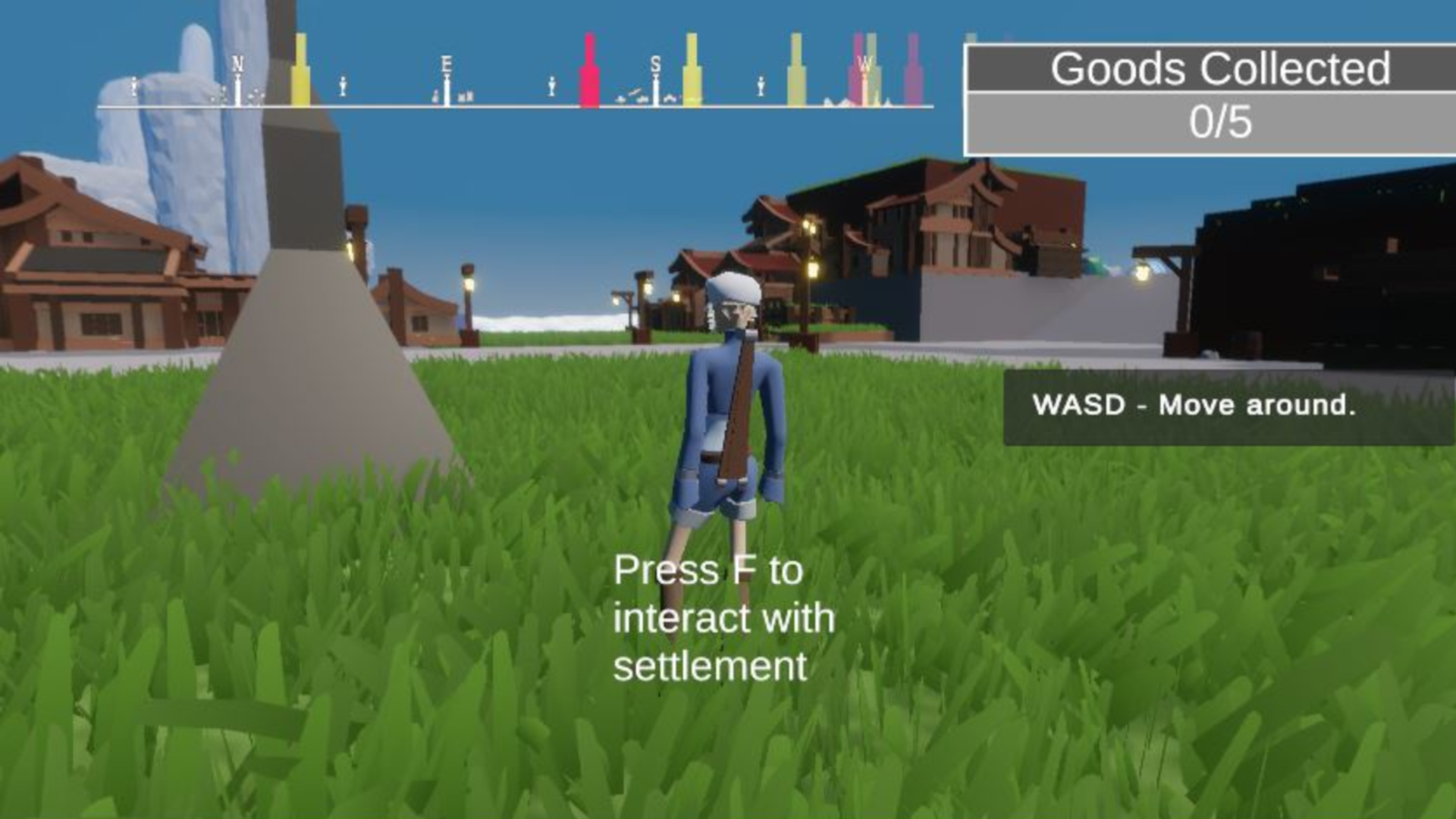
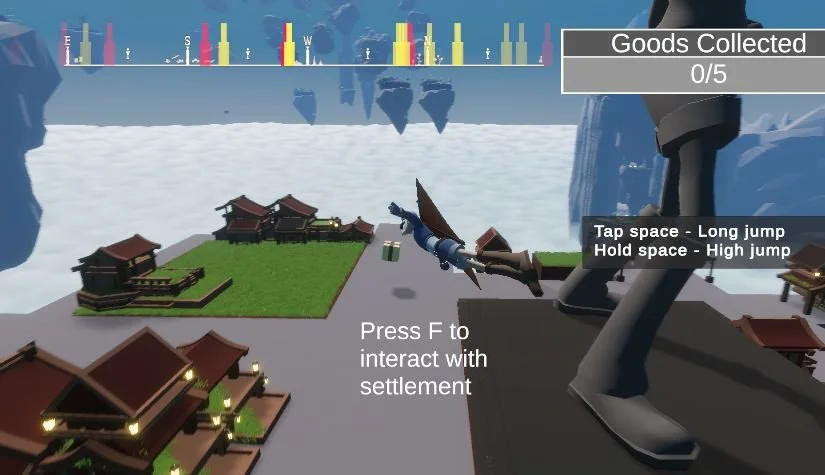
Skybourne was an 11 person production that spanned the course of 8 weeks. Throughout this project i served the role of design lead and system designer.
The most important system that i was responsible for was the gliding movement system that formed the core of the game experience. Getting this system to feel good required a significant amount of experimentation and iteration throughout the entire project, raising a number of unique challenges that needed to be addressed.
A core challenge that presented itself while developing this system was selling the momentum and weight of the player character while gliding, as early on it felt stiff and weightless. Adressing this involved a number of systems and adjustments that working in tandem to sell the players momentum and weight.
Adjusting the gliding speed from a fixed value to a dynamic acceleration system that changed based on the players orientation was one of the most important elements of managing the players momentum, laying the foundations for the entire system.
Setting the camera to zoom out as the character got faster allowed the system to intuitively communicate speed to the player. This simple change significantly improved the feeling of the system overall.
A simple but effective way of further emphasizing the players weight was implementing a gradule tilt down to simulate the concept of gravity and wind acting on the player unevenly. This meant the players would need to make a conscious effort to consistently tilt back up, helping provide the system with a sense of push and pull that increased engagement.
Another core challenge that the system presented was how grounded and gliding movement would transition into eachother. This went through a number of different concepts and iterations that required a significant amount of trial and error before it started feeling good.
Figuring out how the player would land went through a number of iterations, at first the player would instantly enter the running state, however that resulting in a sudden shift in character movement which felt jerky. This was swapped out with a roll state and a slide that would act as a transition into the run, this felt too restrictive however so the slide was removed and the roll was heavily reduced.
Initially the player would have to stop and charge to enter a glide, in isolation this felt good to use however in testing it killed the overall pace of the system. So it was replaced with the concept of gliding out of a jump, this was initially used with a diving jump and was later expanded to include a high jump. This did a good job of selling that transition while giving the player control over how they want to enter glide,.